How to Spot Wildlife on a Scottish Island Without Disturbing It
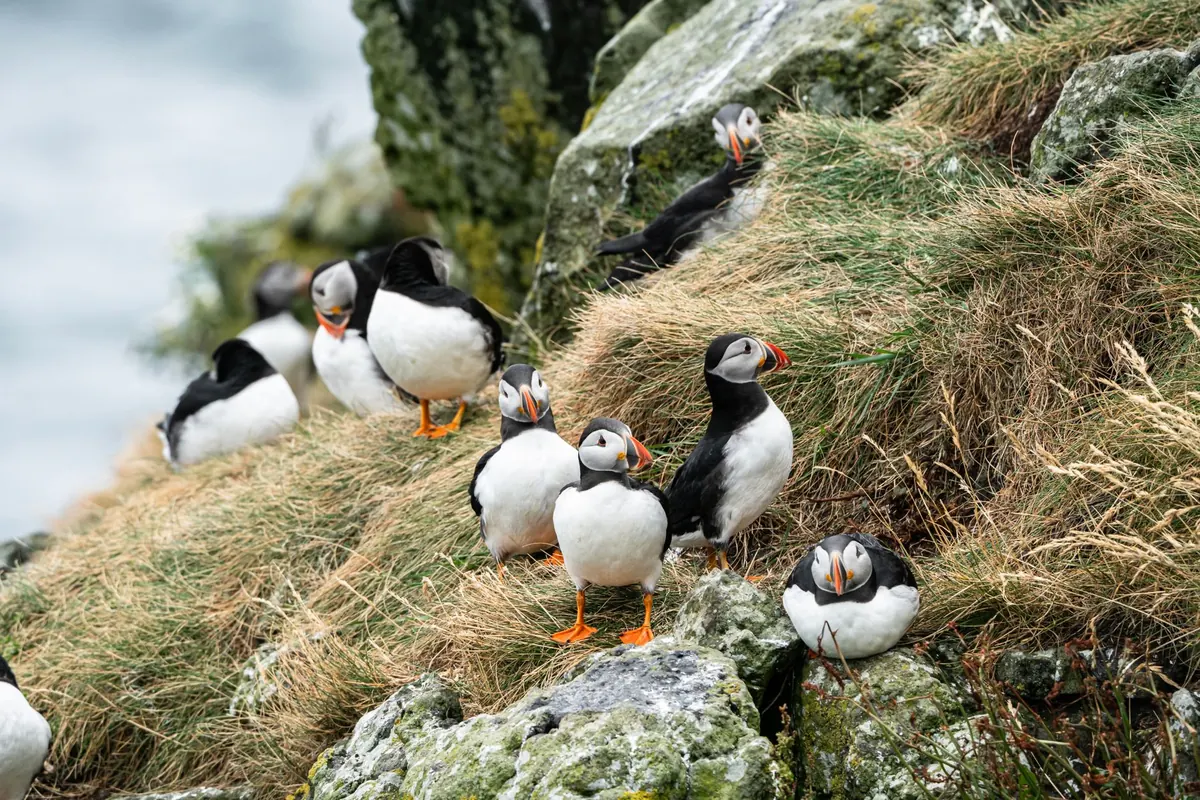
Scotland's islands hold some of the largest seabird colonies in the North Atlantic, along with a fair share of Britain's otters and seals. You don't need luck to see them, or expensive kit. You need timing, patience, binoculars and a sense of when your presence starts to matter to the animal in front of you. The gap between a memorable morning and a harmful one is usually a matter of twenty metres and one decision not to take another step.
Puffins, guillemots and razorbills return to the cliffs in spring, and late May to mid-July is the busiest stretch, as adults ferry fish to chicks. By August, many puffins have gone back to sea.
Grey seals gather in autumn when pups are born, and again when they moult; common, or harbour, seals pup earlier in the summer. Both need long, undisturbed rest on land.
Coastal otters are visible all year, with calm, dry mornings around low tide giving the best odds. On islands with a ferry timetable, the first crossing of the day puts you ashore before the paths fill.
A few small things make the difference between watching and disturbing:
Puffins nest in burrows dug into grassy slopes, usually on islands free of rats and mink. The bird standing at a burrow mouth is often inches from an egg or a chick, and a boot through the roof of a burrow can end that pair's season.
Walk only on paths and bare ground. If a slope is pitted with burrow entrances, don't cross it, not even for a better angle.
The best approach is no approach. Sit or crouch low at the edge of the colony and wait. Puffins circle before landing, and a person standing in their flight line keeps them in the air, burning energy they need for fishing. Stay out of the lane and they will often touch down a few metres away, entirely unbothered.
Skip the phone-at-arm's-length shot. It always pushes you closer than you meant to get.
Seals haul out on skerries, rocky points and beaches to rest and warm up. Breaking that rest is more costly than it looks; a rush into cold water burns energy they were conserving.
Keep well back. A hundred metres is a sensible rule of thumb, and more where pups are present; binoculars or a long lens will get you the picture. From a kayak, give a haul-out a wide berth rather than paddling between the animals and open water.
Read the behaviour. Heads lifting, animals staring your way, shuffling towards the water or a sudden mass slide off the rocks all mean you are too close. Move away slowly.
Never approach a pup, however alone it looks; mothers often leave pups on shore while they feed. If a seal looks injured or entangled, keep your distance and contact a wildlife rescue charity or the Scottish SPCA rather than trying to help it yourself.
Coastal otters are solitary, shy and often active by day, which makes them watchable in theory. In practice, look for signs first: spraint on flat rocks, slides down grassy banks, prints in wet sand. A trail of bubbles or a V-shaped wake in calm water usually means an otter is hunting.
Use cover. Work from behind rocks, walls or seaweed, move while the otter dives and stay still when it surfaces. Watch its head: if it turns and stares, you have been seen, and it may stop fishing. Ten to fifteen metres is a rough guide for a settled otter, and far more for a mother with cubs.
Don't follow along the shore. Pick a vantage point and let the otter's own route bring it past you. If it dives and surfaces nowhere near, that was your doing; back off, wait, and it may return.
Guillemots, razorbills, fulmars, kittiwakes and shags pack onto ledges in numbers that are hard to take in. The cliff is a nursery, and it is fragile in ways that aren't obvious from above.
Never walk to the edge to peer over. Birds flushed from a ledge knock eggs and small chicks off, and gulls take whatever falls. Stay on the path, keep several metres back and use a viewpoint, a boat or the base of the cliff instead.
Where bonxies and Arctic skuas breed, adults defend their nests by diving at heads. A hat helps, as does walking briskly on rather than stopping to film.
If you find a chick on the ground, leave it. Guillemot chicks leave the ledge deliberately, jumping to a waiting parent at sea. Tell a warden or reserve staff. Boat trips can be superb: choose an operator who hangs back, puts the engine in neutral and doesn't chase.
Disturbance isn't always dramatic. Watch for:
If your presence changes what an animal is doing, you are too close. Move back, wait, and let it settle.
Get out early, before the boats land. Walk quietly, stay on paths and leave gates as you found them. Keep binoculars up and feet still. Give every animal an escape route, and never stand between it and the sea.
Many of Scotland's birds, seals and otters are protected, and it can be an offence to disturb them deliberately or recklessly. The detail varies by species and site, so check NatureScot's guidance or ask reserve staff. A few questions at the visitor centre usually reveal where the sensitive spots are and when to stay away.
Do that and you'll see more, not less. A patient hour at the edge of a colony beats a rushed circuit of every viewpoint on the island.
Photo: Ben Jessop / Pexels
Previous Post
A Beginner's Guide to Caribbean Island Culture: Etiquette, Food and Local Customs
Next Post
Island Weather Explained: Trade Winds, Hurricane Season and Microclimates